


Click images to read more writings
Somewhere Near New York Essay Series 4
Gems I Picked Up from the New York Art Scene
Across the US Art SceneIn Seoul, art was rarely something I could enjoy. There were too many other interesting places competing for my attention, and honestly, not that many art spaces I truly loved. That said, there are good memories. The cool air inside the National Museum of Modern and Contemporary Art in Gwacheon, reached by train up the hillside. The happiness of standing under the sunlight filtering through the tall windows of MMCA Seoul. The satisfying softness of a sofa at Art Sonje Center, where I once lingered too long in front of a new Kim Heecheon work and drifted toward sleep — and the mysterious darkness of that arc-shaped gallery, and more. But on most days, unless I was seeing something I genuinely wanted to see, I'd quickly lose interest and feel a strong pull to move on to the next destination.
And yet I came to New York telling myself I would return to art. (Wait — what exactly is it that I mean when I say "art"?) What became clear to me was in New York, museum visits shifted back from obligation to pleasure. Paradoxically, the pressure to study made skimming through galleries feel refreshing and light — and within that lightness, I started wanting to pick things up, take something home with me. Memberships meant I could wander museums without paying, so I went constantly. Before coming to New York, I thought I would find a way to become a curator. Once I arrived, I realized something more complicated: I'm not sure whether what I love is art itself, or everything surrounding it — the spaces, the stories, the meanings, the people making things before anyone recognizes them, and that particular hope that seeing something early might mean something. Whether the traditional role of curator is really what I want remains a genuine question. Even so, the New York art scene kept surprising me, and alongside the pleasure of looking, it kept showing me things worth learning from. Here are some of those insights, briefly.
And yet I came to New York telling myself I would return to art. (Wait — what exactly is it that I mean when I say "art"?) What became clear to me was in New York, museum visits shifted back from obligation to pleasure. Paradoxically, the pressure to study made skimming through galleries feel refreshing and light — and within that lightness, I started wanting to pick things up, take something home with me. Memberships meant I could wander museums without paying, so I went constantly. Before coming to New York, I thought I would find a way to become a curator. Once I arrived, I realized something more complicated: I'm not sure whether what I love is art itself, or everything surrounding it — the spaces, the stories, the meanings, the people making things before anyone recognizes them, and that particular hope that seeing something early might mean something. Whether the traditional role of curator is really what I want remains a genuine question. Even so, the New York art scene kept surprising me, and alongside the pleasure of looking, it kept showing me things worth learning from. Here are some of those insights, briefly.
A Love for Quiet Museums — and the Membership Structure Behind Them
The calm that settles over you when you're alone in a space with just a few people drifting past. That's why I love museums in the early morning — but in New York, it's genuinely hard to come by. Most people I met here said the hardest thing about living in New York is the sheer number of people and the noise that never stops. But member hours make the empty museum possible.
Before arriving, I decided to get memberships and live inside museums every day— so I joined MoMA, the Guggenheim, and the Whitney, plus a student membership with the American Alliance of Museums (AAM). I ended up going about once or twice a week, not every day as planned, but I came to feel that joining was absolutely the right call, thanks to the member-only benefits each institution offered. On top of a partial tax deduction, the basic perks — free admission, guest tickets, design shop discounts — were genuinely attractive, given collections too vast to see in a single day and shops with endlessly interesting things. But the real jewel of any membership is the member hour or member night: a time when the museum opens only for members, and you can finally stand alone in front of works that are ordinarily too crowded to approach.
MoMA set chairs in the terrace sculpture garden during member evenings and handed out wine or beer. Whitney's member nights brought in a DJ — you could dance on the ground floor, get pleasantly warm from cocktails, then wander upstairs to look at art. Those hours were perfect for unexpected encounters. At MoMA, I spent a long time in conversation with an elegantly dressed older woman who had come from Iran, listening to her talk about her life and her philosophy. (What stayed with me: she believed that when you've done something wrong, it's not God who should punish you — you have to do it yourself.) At Whitney, I fell into a conversation with someone who had layered their drawing on top of mine to make a collaborative work, and we ended up sneaking our piece into the bathroom and exhibiting it there.
The Guggenheim had no such events, but its quiet during member hours was a gift enough. Spending about two hours drifting through every corner of the building with the audio guide, crossing paths with just a few elderly visitors and two or three young people — how sweet that was. That day I discovered the reading room for the first time — a space where you can read Cecilia Vicuña's poetry collections and make small works of your own — and a staff member there told me: "Working at the Guggenheim is wonderful — as long as you can go home and cry from the crowds and then show up the next morning like nothing happened." This confirmed that a moment like that one is never to be taken for granted.
The Guggenheim had no such events, but its quiet during member hours was a gift enough. Spending about two hours drifting through every corner of the building with the audio guide, crossing paths with just a few elderly visitors and two or three young people — how sweet that was. That day I discovered the reading room for the first time — a space where you can read Cecilia Vicuña's poetry collections and make small works of your own — and a staff member there told me: "Working at the Guggenheim is wonderful — as long as you can go home and cry from the crowds and then show up the next morning like nothing happened." This confirmed that a moment like that one is never to be taken for granted.


Seoul's art scene is growing, but is there a museum there yet that makes you genuinely want to join as a member? For me, the answer is still mostly no — partly because I can't think of many large-scale private museums worth returning to multiple times a year. But that's also to say there's something to look forward to: the pleasure of waiting to see what will emerge. At the Art Institute of Chicago, I discovered a program called the Modern and Contemporary Reciprocal Membership 2022–23, which linked contemporary museums across the country under a single membership. Joining gave you free admission at every institution on the list, nationwide. I wondered whether something like this exists in Korea — and if not, whether bringing several museums together under a shared program might be worth trying.
When a Museum Becomes a Space
What is a museum actually for? What conditions should it meet? Every American institution I visited was working out its own answer. One that I thought got it most right was MCA Chicago. The exhibitions were strong, but what I remember most is that MCA — quite apart from its beautiful building — knew how to open different parts of its space to visitors and to the public. Looking at the floor map, I noticed something listed as a "Quiet Room" and asked at the front desk what it was. The answer: a space available to anyone for rest and reflection, prayer, or breastfeeding. No conditions, no time limit under thirty minutes — just let the counter know if you'll be staying longer. Inside was a simple sink for prayer or nursing, and a qibla pointing toward Mecca. I spent ten minutes there. Upstairs from the first-floor café, past a staircase, was "The Commons" — an area with tables and chairs where anyone could sit and work freely without buying anything. I watched groups of friends and children using it like it was the most natural thing in the world. I thought of all the times I'd had to move to a café just to write something while in a museum — and of how in Korea, the café has become everyone's living room and study room precisely because genuinely free space is so rare. It was a pleasant kind of shock.


Other spaces stayed with me too; the cushioned sofas with backrests placed throughout Dia: Beacon's galleries, the light-filled café terrace at the Brooklyn Museum, the circular sofa in front of an opaque window at the center of one of the second-floor galleries. The New Museum gave its entire fifth floor over to a rest space and lookout with tables and chairs, open to everyone —I sat there for a while and just looked at the view. How convenient, and how good, that a museum can give you a place to rest and return to the work without ever making you leave the building. Not everyone can stand for two hours at high concentration. Rest is part of spatial design. And when a space is genuinely worth coming back to, interest in the art inside tends to rise with it. A museum has to know how to be a public space — the way a library does. A place where you can develop an aesthetic sensibility without spending a lot of money, where people can talk to strangers and learn something. These were thoughts I'd carried from Korea, but they became stronger in America. One more thing worth mentioning: MCA was fully accessible for visitors with disabilities, and offered free admission to caregivers and disabled visitors. That too should be said.


Rediscovering the Galleries in New York
Sean Kelly Gallery
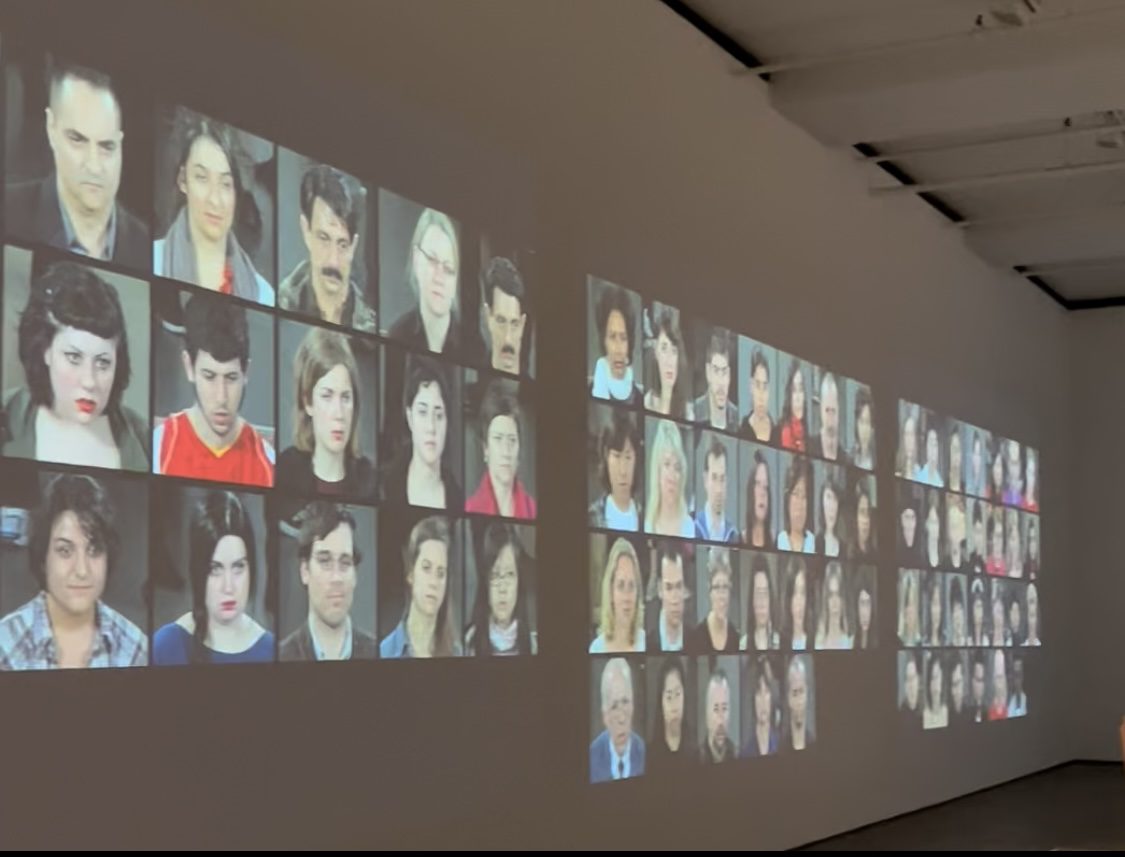
I was surprised to hear recently that one gallery in Seoul — showing Olafur Eliasson — had declared itself a no-kids zone and started charging admission. At Sean Kelly Gallery I may have been watched with unwarranted suspicion, but at least viewing Marina Abramović's work didn't cost me anything. In New York in 2022, visiting galleries was one of my greatest pleasures — and it was a different pleasure from museums. Major works by Barbara Kruger, Nam June Paik, and Damien Hirst flow into New York alongside Hong Kong, Paris, and London. At galleries here you could simply walk in off the street and stand in front of them — recent new works, or early pieces pulled from storage. Just walk in and it’s Free. The galleries that left the deepest impression were Howard Greenberg, David Zwirner, Pace, and Gagosian. Each had a clearly defined character.


Howard Greenberg Gallery
Howard Greenberg is a photography-specialist gallery representing over eighty artists, including Vivian Maier. On my visit, they were showing A Female Gaze — twentieth-century street photography by American women artists. In one corner you could browse and purchase catalogues they'd published relating to the exhibitions. Publishing clearly functions as a second program alongside their commercial work. I didn't make it back for the July show, but they were then presenting work by William Klein, who was simultaneously showing at the International Center of Photography.
Howard Greenberg is a photography-specialist gallery representing over eighty artists, including Vivian Maier. On my visit, they were showing A Female Gaze — twentieth-century street photography by American women artists. In one corner you could browse and purchase catalogues they'd published relating to the exhibitions. Publishing clearly functions as a second program alongside their commercial work. I didn't make it back for the July show, but they were then presenting work by William Klein, who was simultaneously showing at the International Center of Photography.
David Zwirner
David Zwirner, on both my visits, happened to be showing work with a strong feminist dimension. In February: a group show organized around Toni Morrison's The Black Book, gathering artworks related to Morrison's lifelong project of mapping Black women's self-discovery. In July: new work by Barbara Kruger, fresh from her major MoMA commission. What impressed me about the first show was its literary curatorial logic; what struck me about the second was how the overlapping sounds of large-scale video and sound installations filled the entire gallery with a strangely atmospheric feeling.


Pace
Pace Gallery occupies an entire building in Chelsea — exhibitions across five floors (minus the office level), each with a different subject, plus a library open to visitors that I still think about.


Gagosian
Gagosian, which I returned to three times, consistently presented large-scale works by Hirst, Paik, and Michael Heizer with absolute command of scale and negative space — the kind that communicates awe and intimidation at the same time. During the Heizer show, a single enormous work filled an entire room. With two Chelsea locations, I visited both on each trip and left inspired every time.
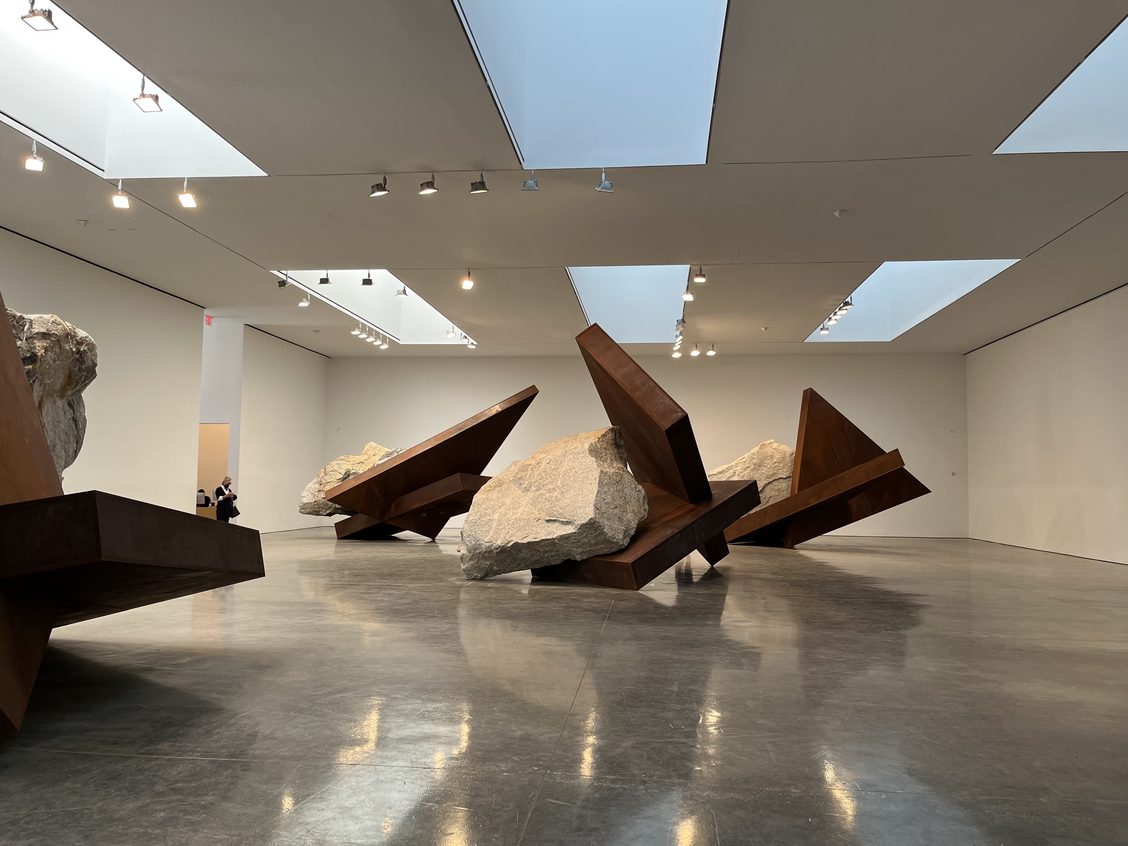

These are galleries staffed by specialists in every department, people who know exactly how to stage, install, and sell work at the highest level — the visual pleasure was constant. What also struck me was the low barrier to entry: spaces funded entirely by sales to wealthy collectors— yet open to anyone who walks in. Cool in summer, warm in winter. I kept finding artists I didn't know yet. And I found myself thinking it might be genuinely interesting to work somewhere like this. Wherever I go from here, I'll be paying attention to galleries.
Best Sensory experiences
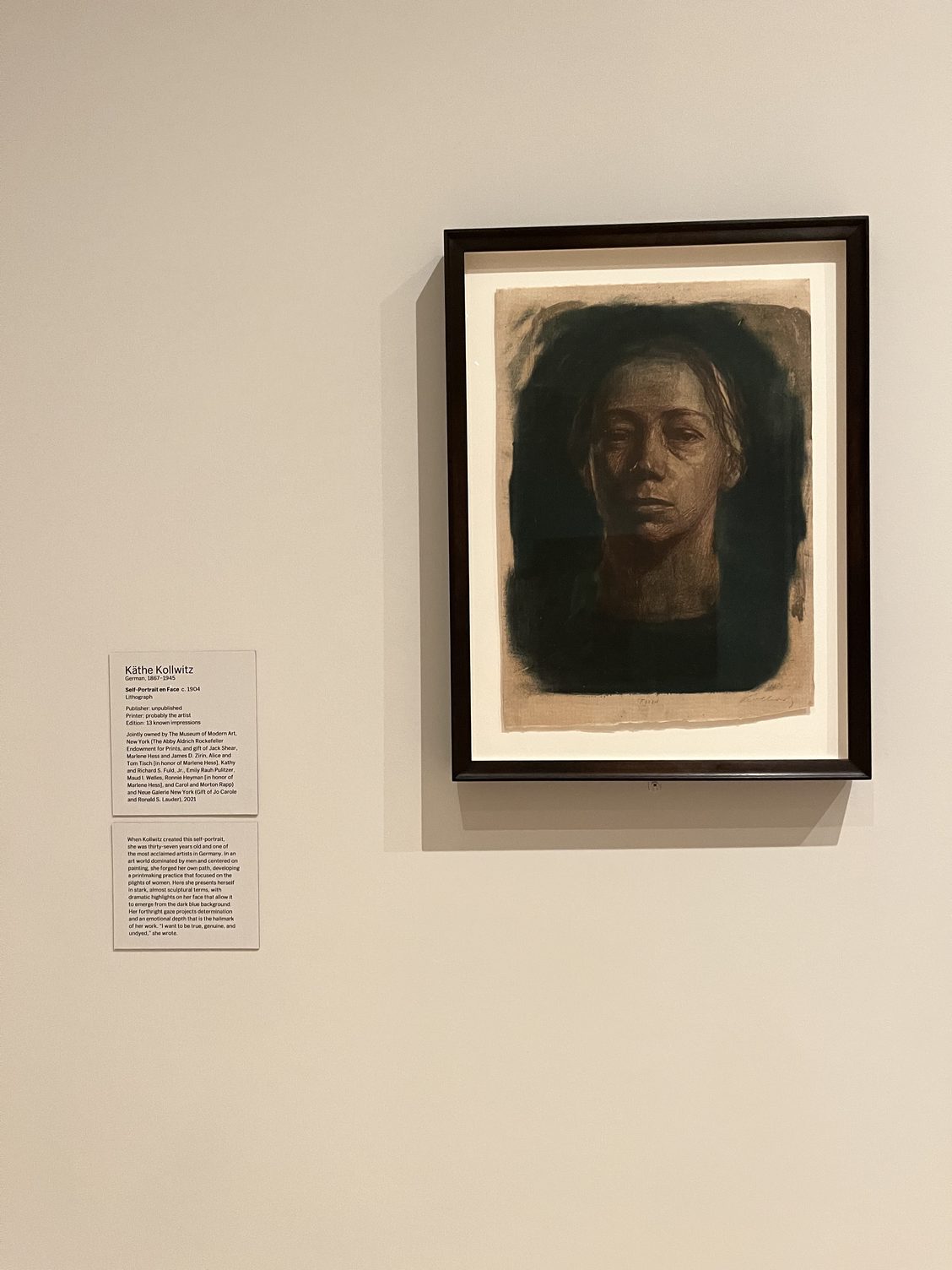
Time and energy are finite, so every visit required choices. Museums are enormous — trying to see everything in a day is almost always overreach. I tried to prioritize works I could actually experience — that required physical presence to feel. Dalí's The Persistence of Memory was smaller than I expected, and I suspected I could encounter it more fully on a screen. Same with certain conceptual works. So I moved past them and spent as long as I could in front of Monet's water lilies, Yves Klein's blue works, Mark Rothko's color fields. And if a work required you to enter a space to feel it — I couldn't walk past. Käthe Kollwitz's work was an exception; although small, the spirituality felt from it has a different feel from prints. Käthe Kollwitz is an exception to the screen-vs-presence rule: small, but the spiritual quality of the work in person is completely different from a print.
Dia:Beacon holds an enormous range of land art and large-scale installation in a converted factory more than ninety minutes north of Grand Central. Natural light illuminates everything, so the mood of each gallery shifts with the angle of the sun. Moving through works spaced generously in wide rooms, I'd start to feel tired — and then descend underground to walk inside a Richard Serra sculpture, or stand inside Dan Flavin's vast blue light installation, or drift through the video works, and suddenly feel something close to a runner's high: the disorientation that arrives when sustained attention tips into something else entirely. I wandered the museum in that state.


At the Rubell Museum in Miami, I saw Yayoi Kusama's Infinity Mirrored Room: Let's Survive Forever (2017). On top of the museum's $25 admission — outside the scope of my AAM membership — the mirror room cost an additional $10 for five minutes. I paid without hesitating. Spheres suspended mid-air, mirrors reflecting mirrors, a view expanding into infinity. Kusama transformed her concept of the infinite into something you could physically enter and inhabit. Five minutes felt like fifty seconds, in a artwork that has aged beautifully over time.

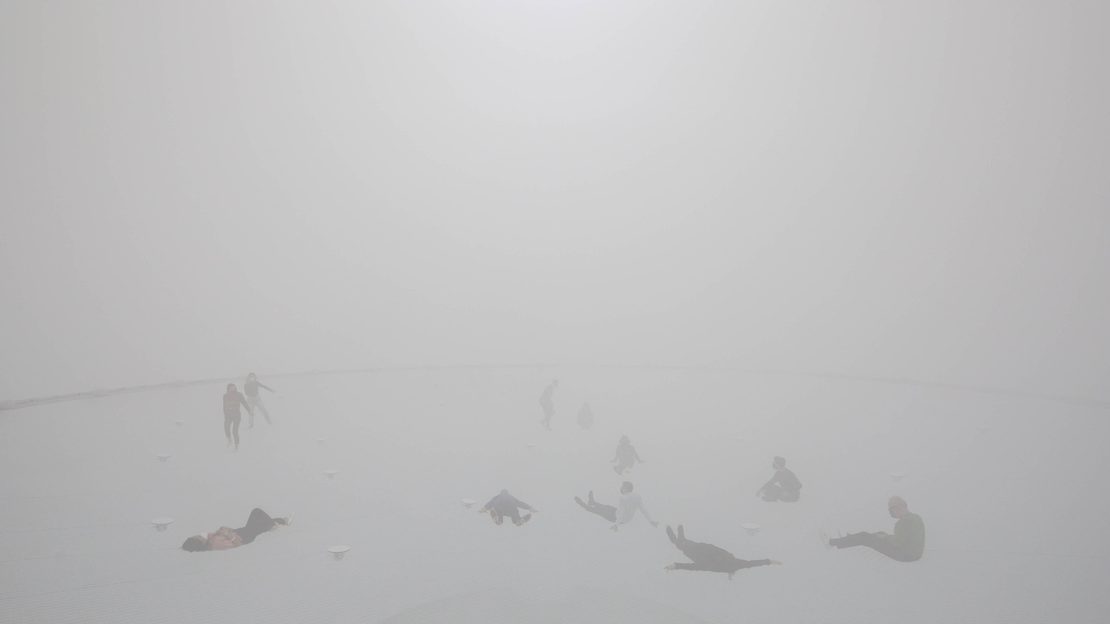
Art speaks to what we can't hold. But we also need what we can hold. The ways to deepen a visitor's experience go beyond offering a photograph to take home — they can leave something that resonates long after leaving. I kept being drawn, again and again, to the examples in the New York art scene that had already worked through those questions.

A Mini Visitor Guide
Space and experience are what this essay has been about — but every place mentioned here is worth visiting. Below are a few more, not covered above, to round out a New York art scene guide. Go find your own gems.
Rubin Museum of Art — dedicated to Himalayan art, but not in the way you might expect. Rather than simply displaying Buddhist art, the museum uses multiple devices to let you feel Buddhist sensibility directly: scent diffusers recreating the atmospheres of different temples, a small shrine space where you can feel something of what it's like to be there, a gong you can strike yourself, a meditation space in front of a light work. Good for when you need to find peace somewhere in Midtown.
Neue Galerie — Woman in Gold alone is reason enough to visit. The collection includes Klimt, Egon Schiele, and other German and Austrian works. The ground-floor Café Sabarsky serves Austrian-style cakes, coffee, and light meals. Both the museum and the café are among my favorite spaces on the Upper West Side.
International Center of Photography (ICP) — near Chinatown, and reliably showing strong photography exhibitions. The gift shop's selection of photography books is worth browsing on its own. When I visited, a major William Klein retrospective filled the space generously, and the feeling of room to breathe while looking was refreshing. They also run public programs and classes — if you're in New York for an extended stay, worth looking into.
By interest: History lovers — American Museum of Natural History is essential. Design — Cooper Hewitt Smithsonian Design Museum and the Museum of Arts and Design (MAD). New York history — Museum of the City of New York. Architecture — Center for Architecture (AIA). Fashion — The Museum at FIT. Classical and medieval art — Frick Collection (currently showing elsewhere) and The Met Cloisters.
Beyond New York: Portland Art Museum, MCA Chicago, Rubell Museum Miami, Erotic Art Museum, The Bass. New York museums aren't the only ones worth your time — each city's contemporary institutions has strong collections and rotating exhibitions. If you travel during an exchange semester, check the museums wherever you land.
For books and publications: Beyond museum gift shops, downtown has Karma Books, Bungee Space, and Mast Books — all focused on art publications, all with an independent bookshop feeling. McNally Jackson in SoHo, Casa Magazine in the West Village, and Iconic Magazine on the Bowery each stock publications from across the world. Visit any one of them with an open question — what kind of magazine could possibly exist? — and you'll find something made by someone who got there before you.
If you can only pick one of the four major New York museums: I'd choose MoMA for its sheer breadth of collection — encountering works you've only ever seen in textbooks is consistently surprising, whether or not you consider yourself an art person. The Guggenheim if you want to experience the architecture and that unusual spiral descent; its collection has a different character from MoMA's, and a visit doesn't take as long. Whitney for American contemporary art specifically — the Biennial is currently on. The Metropolitan if "museum" in the fullest sense — artifacts, objects, history alongside art — is what you're after. If contemporary art isn't your main interest, the Met is actually the better recommendation.
For gallery and museum news beyond what's listed here, Artforum, Artreview, Hyperallergic could be the good starting point to check before you go.
Written in July 2022. Revised for this version.